
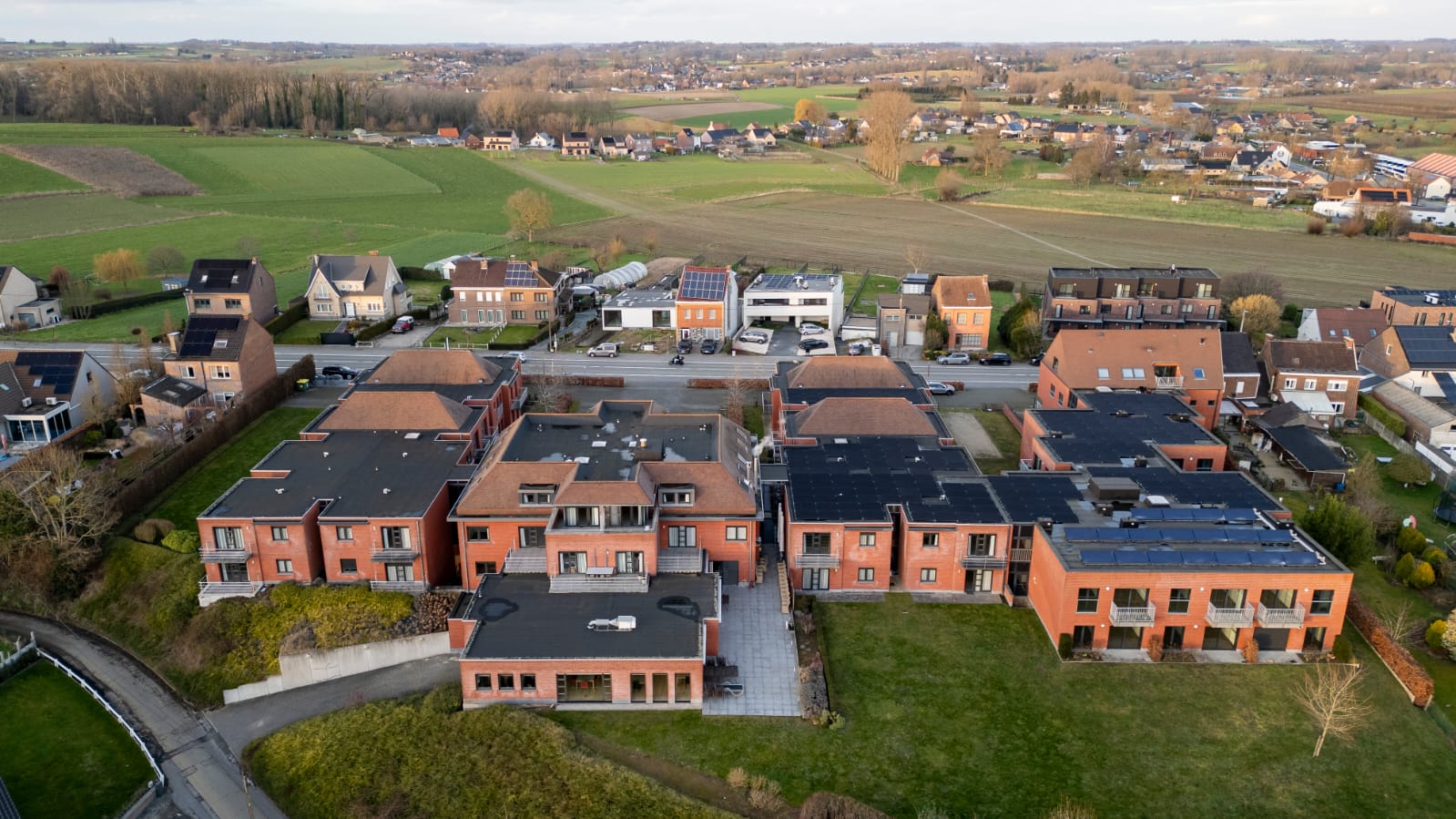
68 residents with intellectual disabilities, autism spectrum disorder (ASD), or behavioral disorders will soon be welcomed to Leerbeek-Kester, thanks to the acquisition and renovation of the Kesterberg complex by the nonprofit organization De Okkernoot. With a total budget of €13,000,000 and thanks to a substantial loan, Constellations will help De Okkernoot secure the remaining €2 million. Renovation and refurbishment work will begin in early 2028, with an opening scheduled for early 2029.
What It Is
Founded on November 29, 1990, by Jan and Patricia Houthuys-Hamelrijck following the loss of their autistic son, the non-profit organization De Okkernoot was born out of a desire to create a supportive, welcoming living environment in Flemish Brabant that respects each person’s uniqueness. Since purchasing its first farm in Vollezele in 1992, the organization has continued to grow. Today, it provides services throughout the Pajottenland region: Vollezele, Halle, Denderwindeke, Herne, Grimminge, Pepingen, and now Leerbeek-Kester. Its headquarters are located at Repingestraat 12 in Vollezele.
The organization specializes in providing care for individuals with autism spectrum disorder (ASD) or an intellectual disability, whether or not these conditions are accompanied by behavioral disorders (dual diagnosis).
Accredited by the VAPH, the Flemish Agency for People with Disabilities, as a multifunctional center (MFC) and a directly accessible support service (RTH), the nonprofit organization De Okkernoot offers tailored support throughout the life of people with disabilities: permanent or temporary housing, daytime activities (workshops, the café-restaurant, and the neighborhood grocery store De Coupee in Herne), supported employment, and outpatient support at home or in school settings.
Why This Project Is Necessary
The Halle region has historically faced a significant shortage of infrastructure to house and support people with intellectual disabilities. The waiting lists are extremely long, to the point that Vlabinvest and the VAPH have made this a particular focus of their attention.
De Okkernoot is already a major player in the region. It is taking a significant step forward with the acquisition of the Kesterberg service-flats complex in Leerbeek (Ninoofsesteenweg 127). This project will create 68 residential units for residents with high levels of dependency, set in a green and peaceful environment.
Located just 8.5 km from the nonprofit organization’s historic site in Vollezele, Kesterberg offers a green, peaceful, and accessible setting (with walking trails and public transportation) in the heart of the village of Leerbeek. It promotes the inclusion of the people who will be welcomed there.
The project is primarily aimed at creating new housing units, with a particular focus on individuals with dual diagnoses, who often face even greater difficulties in finding appropriate housing. At least 12 of the 68 housing units created will be dedicated to supporting them.
What Will Be Done
The complete renovation of the Kesterberg site will provide space for 68 people in modern, spacious facilities that are 100% accessible to people with limited mobility:
- 2 residential units for 6 people with severe intellectual disabilities and/or emotional, behavioral, or autism-related disorders.
- 6 units accommodating 7 to 8 people each; each group consists of two connected apartments to create spacious communal areas (kitchen, staff room, snoezelen room).
- 10 assisted-living apartments designed to help people with mild to moderate intellectual disabilities become more independent. They will continue to receive the same level of daytime support: they will have access to the activities and outings offered at the center.
- Access and Infrastructure: Each living group has its own separate exterior entrance, wheelchair ramps, accessible restrooms, and medical equipment (medical beds, patient lifts). The facility will also include a swimming pool and a physical therapy room.
What is the status of the project?
The nonprofit organization was able to acquire the Kesterberg site in September 2026 thanks to a large bank loan, made possible by funding provided by VIPA, the Flemish infrastructure fund, and by the use of its own funds—accumulated over the years—as pre-financing.
The zoning permit was obtained even before the sale was finalized, in order to minimize the risks associated with the project and expedite its opening. Construction is expected to begin sometime in 2028, with an anticipated opening in late 2028 or early 2029.
 A question about Constellations?