
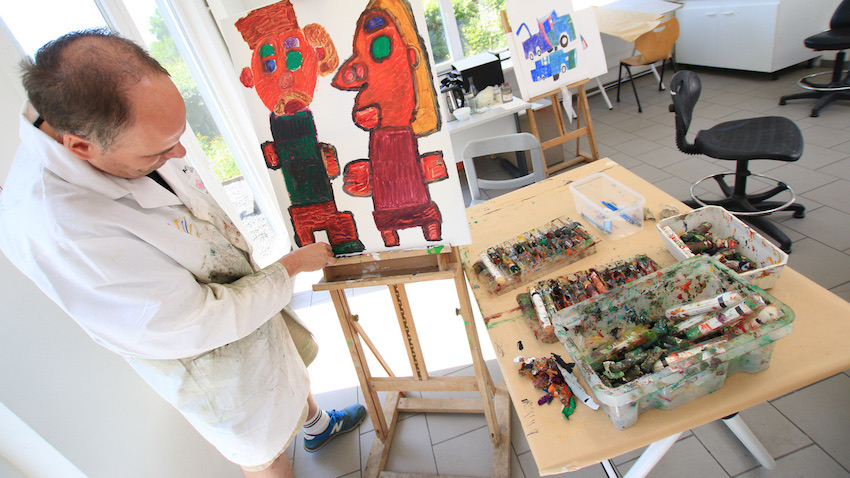
The social inclusion of people with disabilities remains a challenge. Although the employment of people with disabilities is enshrined in law, it is clear that their access to employment remains limited.
The 3% quota set for public-sector companies is far from being met, even when jobs outsourced to sheltered workshops are included. And private companies rarely take advantage of the incentives offered by the government when hiring people with disabilities.
Despite the support measures that have been put in place, recruiters remain hesitant to hire people with disabilities—and that goes double for those with intellectual disabilities.
The need to adapt workstations, ensure workplace accessibility, and train employees are all excuses for not making the effort.
And yet, how rewarding it is to work together!
The key challenge is to engage both public and private companies with the goal of meeting the needs and expectations of all stakeholders.
It is therefore necessary to better inform and raise awareness among all stakeholders in an inclusive manner. A shift in attitudes must take place to address this situation.
With a little goodwill and a lot of determination, employers would realize that genuine dialogue is possible.
Having a job and engaging in professional activities are important aspects of every citizen’s life. Participating in the broader activities of “society” allows individuals to establish their personal status and earn a living by putting their talents to use.
For a person with a disability, having a job will help them learn how to manage their time and give them the opportunity to build social connections and gain recognition. The simple fact of having to appear in public requires one to take care of one’s appearance, which also boosts self-confidence.
Of course, work should not be viewed as a burden for people with intellectual disabilities, but rather as an opportunity to build their self-confidence, sense of responsibility, and sense of belonging in society. Work can greatly contribute to their happiness and well-being.
Some studies show that people with intellectual disabilities who work are in better physical and mental health, have richer social relationships, and experience a sense of fulfillment and satisfaction.
Flourishing as an active participant in one’s own life and in society is particularly rewarding.
Work can therefore be considered a key factor in social inclusion and self-fulfillment. This is why it is important for businesses and government agencies to work together to create a more inclusive labor market.
Some organizations that specialize in supporting people with intellectual disabilities play a vital role by offering adapted jobs, vocational training workshops, and even internships at companies.
Because, let’s not forget, matching jobs to each individual’s skills is essential for their successful integration and for them to be able to demonstrate that they, too, add value.
The development of skills and competencies contributes to the psychological well-being of the individuals we support. Work is therefore a source of meaning, care, and inclusion.
Photos





 A question about Constellations?