
Annick Segers
Just as it is for all of us, life expectancy for people with intellectual disabilities is increasing. In fact, it has increased significantly more than ours. And that’s a very good thing.
Because this is the result of improved medical and social care, better health services, and greater integration of these individuals into our society.
But the consequence of this improvement in the quality of life for people with intellectual disabilities is that today, parents must assume that their child will outlive them. And this is a major source of anxiety for the families of people with disabilities.
While our society has recognized the reality of “our” aging population by creating a range of services for the elderly (nursing homes, Alzheimer’s care, specialized care), there are still very few solutions tailored to the needs of aging people with intellectual disabilities. Our society—and by extension, our public authorities—must develop specialized facilities for older adults with intellectual disabilities in order to address this new reality.
Aging among people with severe and profound intellectual disabilities is a phenomenon that deserves and requires special attention, as it presents complex challenges for the individuals involved, their families, and the professionals who support them. The physical, psychological, and social changes associated with aging affect everyone, but these changes are even more pronounced for adults with intellectual disabilities.
At FARRA’s residential and day services, we provide support to people facing health issues related to aging, such as cognitive impairments, chronic illnesses, and mobility difficulties.
Our nonprofit organization welcomes people aged 18 and older, with no upper age limit. The oldest resident is currently 64 years old.
64 years old—for us, able-bodied people, that’s not old. But for some of our beneficiaries, it is! We’re talking about premature aging among people with disabilities, which results in a discrepancy between the age at which signs of aging appear and the age at which these signs would normally be expected. And these new circumstances require us to adapt our support services.
The role of educators and caregivers is changing. They must continue to provide educational and social support while also incorporating geriatric approaches tailored to people with intellectual disabilities. This involves working closely with healthcare professionals and adapting activities to suit participants’ physical and cognitive abilities.
And this cannot be done at the expense of the other residents.
At FARRA, our work supporting our aging beneficiaries has led us to include disability-specific palliative care, Alzheimer’s disease management, numerous medical appointments, and dialysis management…
In addition to the medical management of these issues, they also raise ethical questions regarding the care of people with disabilities and the elderly, as caregivers must uphold residents’ rights and dignity while participating in the implementation of care systems that can sometimes be complex.
In conclusion, the aging of people with severe or profound intellectual disabilities presents a multifaceted challenge for all services whose client populations are aging.
FARRA hopes to provide an appropriate response to these individuals.
The nonprofit organization hopes to establish a specialized facility for elderly people with intellectual disabilities who require care—a type of nursing home adapted to meet the needs of people with intellectual disabilities (MRS-H).
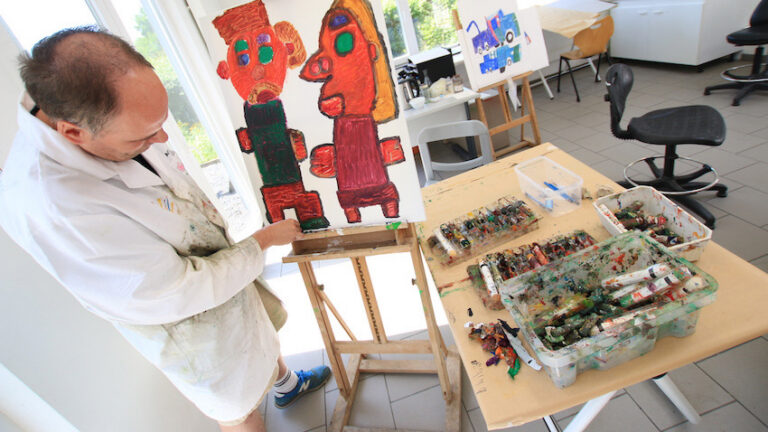
This service would organize activities (focused on daily living skills, staying active, creativity, etc.) and programs, with the goal of helping aging people with disabilities maintain their independence while providing support and an educational approach to the care team.
Effective collaboration and the sharing of best practices between healthcare and educational staff can only benefit the residents and ensure comprehensive, individualized care for older adults with intellectual disabilities.
For us, this ensures that we provide them with the best possible quality of life—a right to which everyone is entitled, even older people with severe intellectual disabilities.
Annick Segers, Executive Director of FARRA
Photos



 A question about Constellations?